Mirissa & Weligama Guide: Beaches, Whales & Safaris
Whale watching, surf lessons and the best beaches from Mirissa to Ahangama, plus easy Udawalawe and Yala safari days from the south coast.


Quick facts
- Best months
- Dec–Apr
- Whale season
- Roughly Nov/Dec–Apr
- How long
- 3–5 nights
- Closest park
- Udawalawe, ~2 h
- Yala
- ~2 h 45, pickup before 3 am
- Good for
- Whales, surf lessons, beach days
On this page
This stretch of coast packs three very different beach towns into half an hour of road. Mirissa is the postcard beach with whale boats in the harbour. Weligama is a wide, gentle bay full of surf schools. Ahangama is where the better surfers, remote workers and design-led villas have gone.
Couples, groups of friends and first-time surfers settle in happily, and so does anyone who wants the sea at the centre of the day. Families do well too, as long as you stick to the calm corners in season.
Everything here turns on the season. From roughly December to April the sea is calm, whales are offshore and everything is open. From May to September the south-west monsoon brings rough water and rain showers, October is changeable, and the whale boats mostly stay in port until the season restarts. Plan beach days for the dry season, and use the rest of the year for safaris, Galle Fort and the hills.
Mirissa, Weligama or Ahangama?
Choose by what you want to do in the water:
- Mirissa: a curved, palm-backed beach with a lively strip of restaurants and bars, plus the harbour for whale watching. Good for swimming in season, and the most going on after dark.
- Weligama: a long, sandy bay about 15 minutes west, with small, slow waves that make it Sri Lanka's favourite place to learn to surf. It's cheaper and more local, though the main road behind the beach is busy.
- Ahangama: a laid-back strip about 30 minutes west of Mirissa, with reef breaks for improving surfers, plenty of good coffee and boutique villas. Pick it for surf and cafés rather than a proper swimming beach.
All three share the same tuk-tuks, the same coastal railway and, for safaris, almost identical pickup times.
Best things to do in Mirissa
- Coconut Tree Hill. The famous headland of leaning palms, a 15 to 20 minute walk from the eastern end of the beach. It's free. Go at sunrise to have it almost to yourself, as sunset gets busy.
- Parrot Rock. The little rocky islet just off the beach, reachable at low tide with a scramble up uneven steps. The view back along the bay is worth the wet feet.
- Secret Beach. A small cove tucked behind a headland, a short tuk-tuk ride from the main beach, with a simple bar and snorkelling when the sea is calm. Go in the morning.
- Swimming and snorkelling. In season the water is clear and warm. Swim where locals and lifeguards say it's safe, and don't touch coral or turtles.
- Seafood by candlelight. After dark the beach turns into a long row of tables with the day's catch on ice. Pick your fish and agree the price by weight before it goes on the grill.
- The southern tip. Dondra Head lighthouse, about half an hour east near Matara, marks the southernmost point of Sri Lanka. It makes a good late-afternoon outing when you've had enough sand.
Weligama and Ahangama: the surf towns
Weligama is where many people stand up on a board for the first time. Waves roll in slow and soft over a sandy bottom, and surf schools line the beach offering lessons of around 90 minutes to two hours, board included. Mornings are best, before the onshore wind picks up. Out in the bay sits Taprobane Island, a tiny islet whose villa was built by a Frenchman in the 1920s and where the writer Paul Bowles later lived. Today it's a private rental, best admired from the shore at sunset.
Ahangama is the next step up. Kabalana beach has both ends of the scale: a beach break that suits beginners, and The Rock, a powerful A-frame reef wave for experienced surfers only. Midigama, between Weligama and Ahangama, adds reef waves such as Lazy Left for intermediates. The wave season runs from November to April, and line-ups are friendlier early in the morning.
A few tips if you're learning:
- Choose your school with care. Look for small groups, soft-top boards and instructors who explain currents and etiquette on the sand first.
- Cover up. A rash vest saves your back from the sun, and you'll want reef shoes on Ahangama's rocky entries.
- Know your limits. If you can't yet turn and stop, stay on the beach breaks at Weligama and Kabalana, and leave the reefs to the regulars.
Beyond the surf, this stretch is home to the famous stilt fishermen around Ahangama and Koggala. Most now pose for photos and expect a tip, so agree an amount before you raise your camera. A boat trip on Koggala Lake, with its mangroves and small islands, makes an easy half-day off the beach.
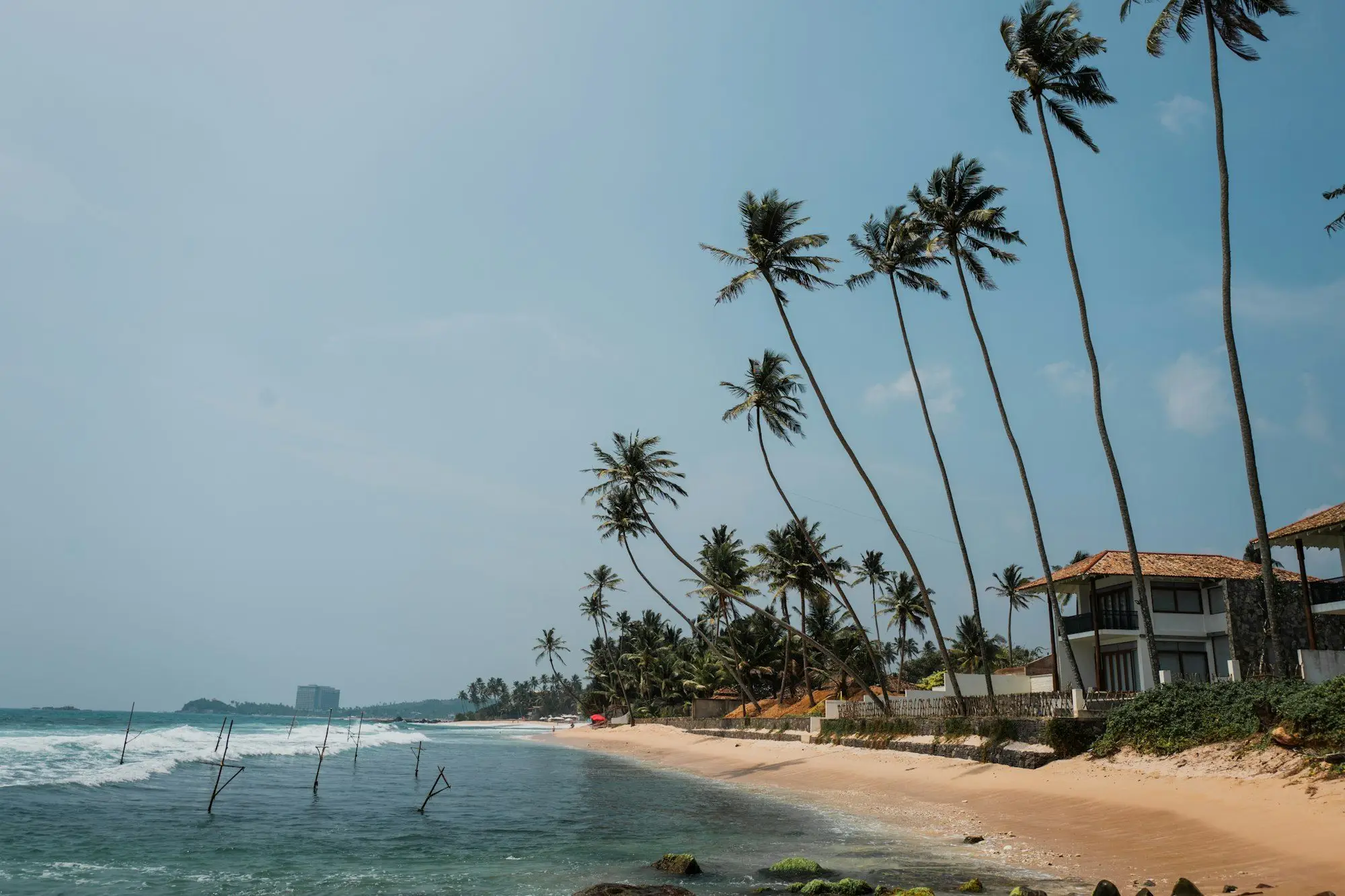
Stilt-fishing poles off a palm-lined south-coast beach. Most fishermen now pose for tips, so agree an amount first.
Whale watching: season and ethics
Mirissa is one of the best places in the world to see blue whales, and an early boat trip is the reason many people come. Sperm whales, Bryde's whales and spinner dolphins turn up too. Sightings are likely in peak season, but no responsible operator will promise one.
When to go. Boats run from roughly November or December to April, with the calmest seas from December to March. During the south-west monsoon, from May to September, the sea is rough and most trips stop until the season restarts; whale watching moves to Trincomalee on the east coast.
What to expect. Boats leave Mirissa harbour early, around 6 to 7 am, and are usually out for three to five hours, sometimes longer. The swell can be lumpy even in season. Take seasickness tablets before you board, eat a light breakfast, and sit in the middle of the boat looking at the horizon. Bring a hat, sunscreen and a light layer, as the ride out can be breezy before the sun gets going.
The rules. Sri Lanka's 2012 marine mammal regulations require boats to keep a minimum distance from whales (widely cited as 100 metres). Nobody may get in the water with them without written permission from the Department of Wildlife Conservation.
How to choose a responsible trip:
- Pick an operator that briefs you on the distance rules before leaving and says plainly that sightings aren't guaranteed.
- Prefer smaller boats that aren't packed to the rails, with life jackets for everyone.
- Avoid anyone promising close encounters or a swim.
- If your captain chases a whale or cuts across its path, say so on board, and again in your review.
Where to stay on this stretch
- Mirissa beachfront puts you on the sand with restaurants at the door, but it's the liveliest spot at night. The lanes inland and the hillsides above the bay are quieter, with villas and guesthouses a short walk or tuk-tuk ride from the beach.
- Weligama has the widest choice of surf camps and budget guesthouses, plus a few bigger hotels.
- Ahangama and Midigama are about villas and boutique guesthouses, many with pools. They suit you best if you're happy to take a tuk-tuk to dinner.
Book well ahead for the Christmas and New Year weeks, when prices jump and the good rooms go early.
Getting there: expressway, train, transfers
- By road: the Southern Expressway makes this an easy drive. Mirissa is about 3¼ hours from Colombo Airport and about 3 hours from Colombo. Mirissa is around 13 km from the Kokmaduwa exit. Galle is about 45 minutes away, Tangalle about an hour, and Ella about 3½ hours.
- By train: the coastal line from Colombo Fort stops at Weligama and Mirissa and takes around three hours or a little more, much of it beside the sea. Sit on the right-hand side heading south for the views. It's the cheap, scenic option, but with surfboards or heavy bags a car is far easier.
- Getting around: tuk-tuks shuttle between the three towns; agree the fare before you go. Scooter hire is common, but the coast road is fast and busy.
- Private transfers: our transfers page covers one-way rides along the coast, to the airport and up to the hills.
Safari from Mirissa: Udawalawe or Yala
From Mirissa, Weligama or Ahangama, both southern parks make a comfortable day trip. Either one also fits neatly on the road to Ella if the hills are your next stop.
Udawalawe is the closest, about two hours away. A morning drive means a pickup around a quarter to four, and you're back at the beach by early afternoon. Wild elephants are very likely, the landscape is open and easy to watch, and it's a gentle first safari for children.
Yala is about 2¾ hours away, so the morning drive needs a pickup before 3 am. It's the park for leopards, but a sighting is possible rather than likely, and never guaranteed. It's busier too, with real jeep jams in peak season, and Blocks 1 and 2 usually close for a few weeks in September–October (in 2026 the closure was set for 14 September to 15 October).
Wilpattu is more than six hours away. Save it for the start or end of your trip, near Negombo or the Cultural Triangle.
Mornings are cooler, the animals are at their most active, and the beach is still waiting when you get back. An afternoon Udawalawe drive is the lazy option: leave around midday and you're home after dark. An afternoon at Yala means leaving mid-morning and a late return.
Beach to hills in one day
If Ella is next, don't come back to the beach at all. Bring your bags, spend the morning with the elephants and carry on up into the hills.
You're at the Udawalawe gate before 6 and out of the park by mid-morning. Lunch is on the way, and you reach Ella by early afternoon. Our Ella to Mirissa route guide covers this day in both directions, Yala included. Carrying on east instead? Tangalle and Hiriketiya are an hour or less away: see our Tangalle and Hiriketiya guide.
Best time to visit
- December to April: dry, sunny and calm. It's whale season and the best time for swimming and learning to surf. Prices peak around Christmas and New Year.
- May to September: the south-west monsoon. Showers come and go, the sea is rough and many beaches fly red flags. Some places close, prices fall and everything turns very green. Many surfers head to the east coast, and whale watchers go to Trincomalee.
- October and November: shoulder months, with the season ramping up and a mix of sun and showers.
Safaris work in any month: Udawalawe is good all year, and Yala's best leopard months are February to July.
Good to know
Mirissa, Weligama or Ahangama: where should I stay?
Mirissa for a postcard beach and whale trips, Weligama to learn to surf, Ahangama for better waves, cafés and villas. They're 15 to 30 minutes apart, so you can easily sample all three.
When is whale watching season in Mirissa?
Roughly November or December to April, with the calmest seas from December to March. The south-west monsoon (May to September) makes the sea rough, so most boats stop until the season restarts, and Trincomalee on the east coast takes over.
Can I do a safari from Mirissa as a day trip?
Yes. Udawalawe is about two hours away, so a morning drive means a pickup around a quarter to four and you're back by early afternoon. Yala is about 2¾ hours each way, with a pickup before 3 am.
Is Udawalawe or Yala better from Mirissa?
Udawalawe for a shorter day and elephants on almost every drive; Yala if you want a chance of a leopard and don't mind a longer day with more jeeps. Both also work one way, on the road to Ella.
Is Mirissa worth visiting in the monsoon?
It's quieter and cheaper during the south-west monsoon, from May to September, but expect showers, rough seas and red flags on many beaches, and most whale trips stop. Galle Fort and safaris still work well.

Turn the drive into a safari day
We pick you up where you're staying, stop at the park and take you on to your next stop. Private car, private jeep, park tickets: one all-in estimate, sent on WhatsApp. No deposit, pay on the day.
Mirissa toKeep planning
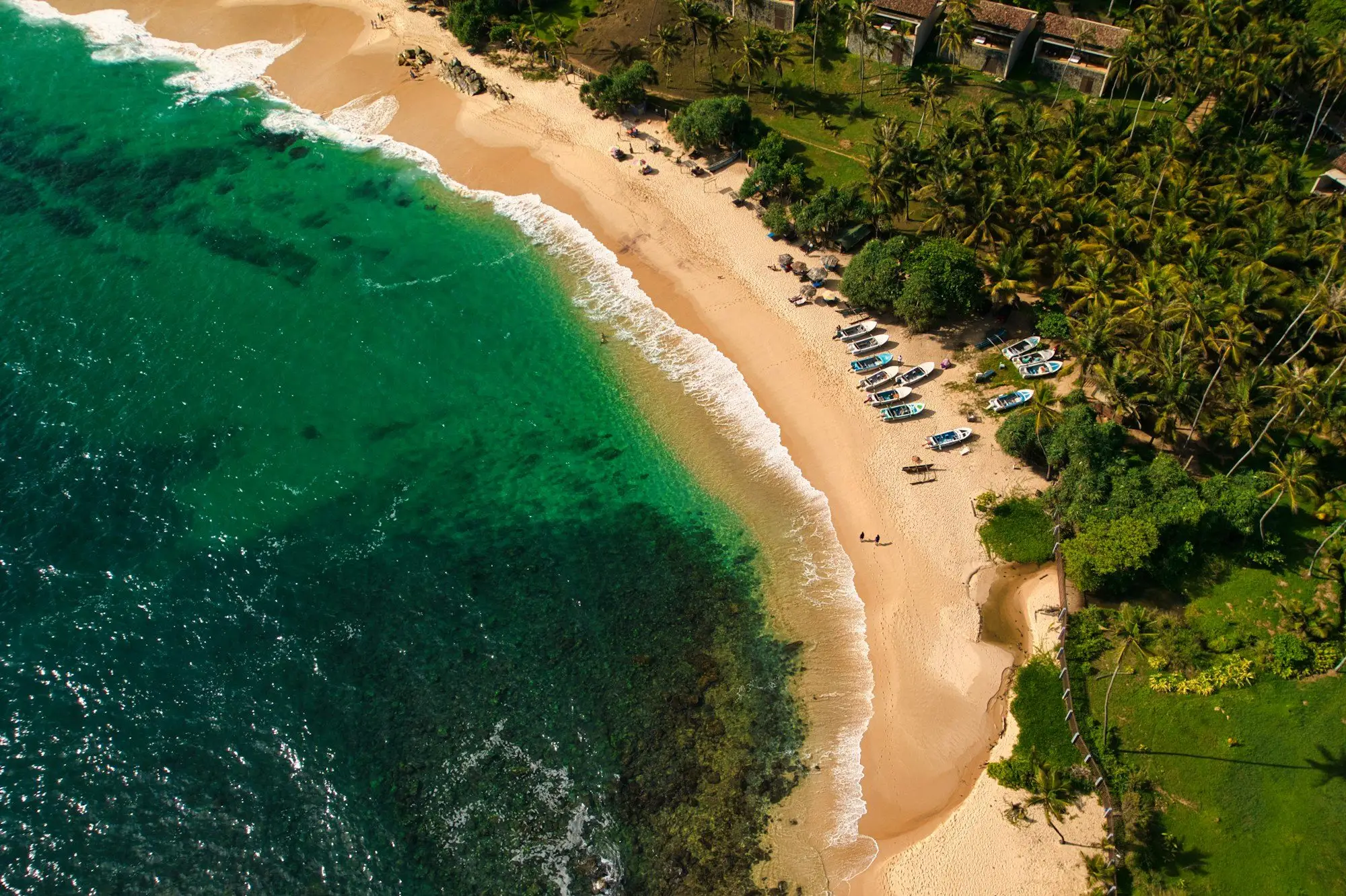

Tangalle & Hiriketiya Guide: Beaches, Surf & Yala Trips
Quiet beaches, Hiriketiya's surf bay and turtle nights at Rekawa, plus why Tangalle is one of the easiest bases for a Yala safari day.
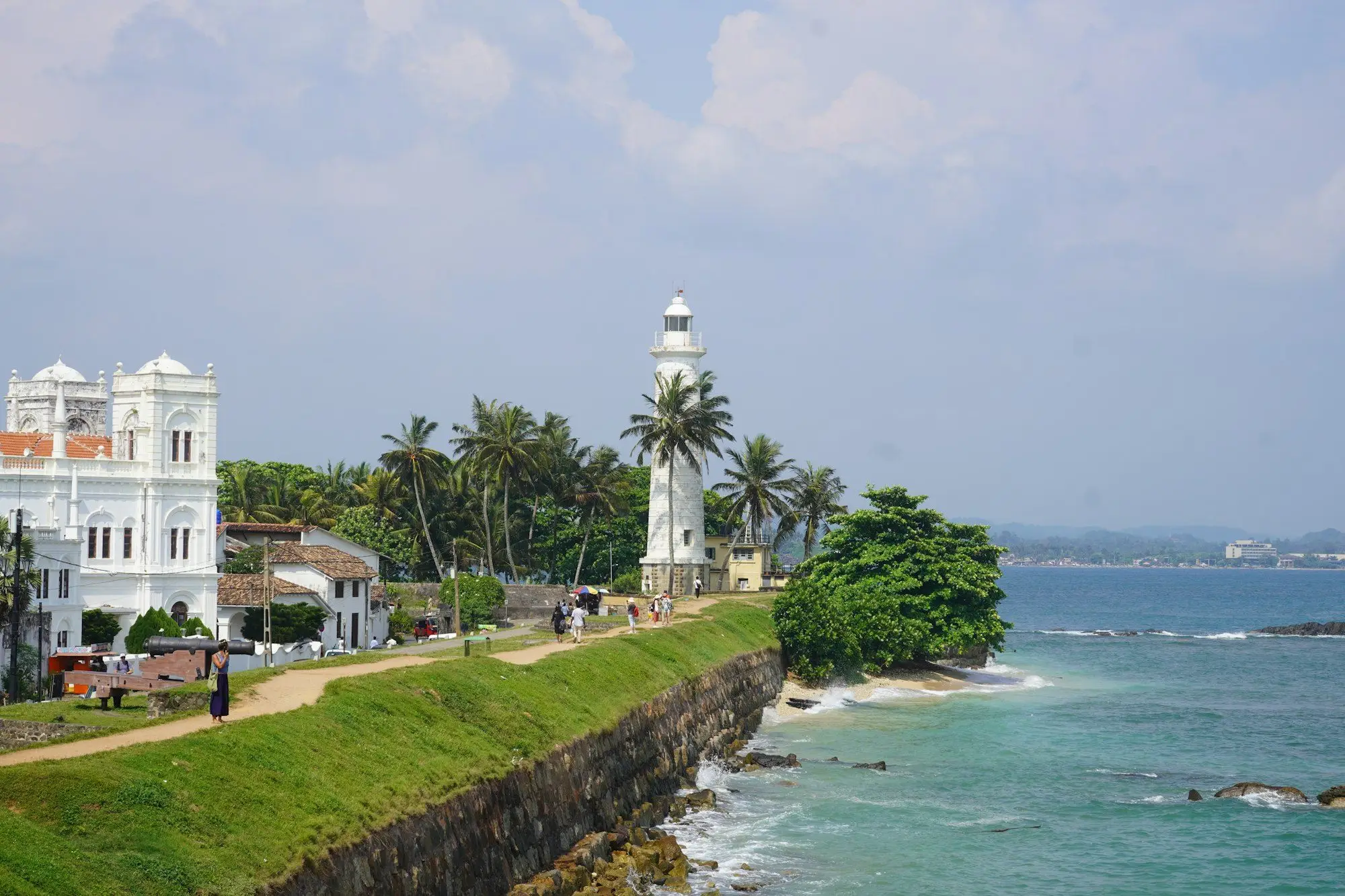

Galle & Unawatuna Guide: Fort, Beaches & Safari Days
Walk Galle Fort's ramparts, swim at Unawatuna and Jungle Beach, and see how an Udawalawe or Yala safari fits into a stay on the Galle coast.
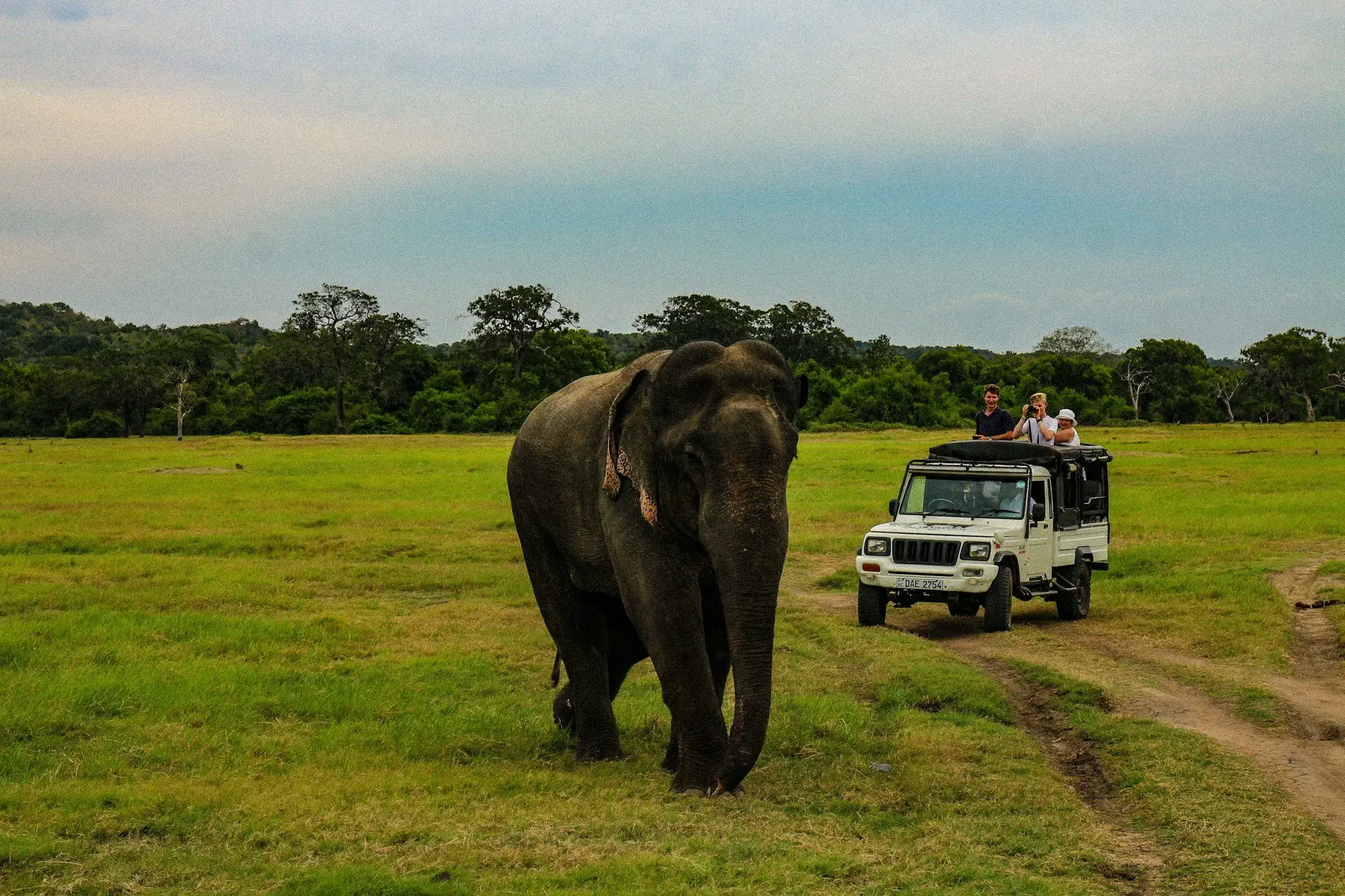

Ella to Mirissa via Yala or Udawalawe: Safari on the Way
How the Ella to Mirissa safari transfer works: Yala vs Udawalawe, timings, luggage, all-in costs and the reverse trip from Mirissa to Ella.